


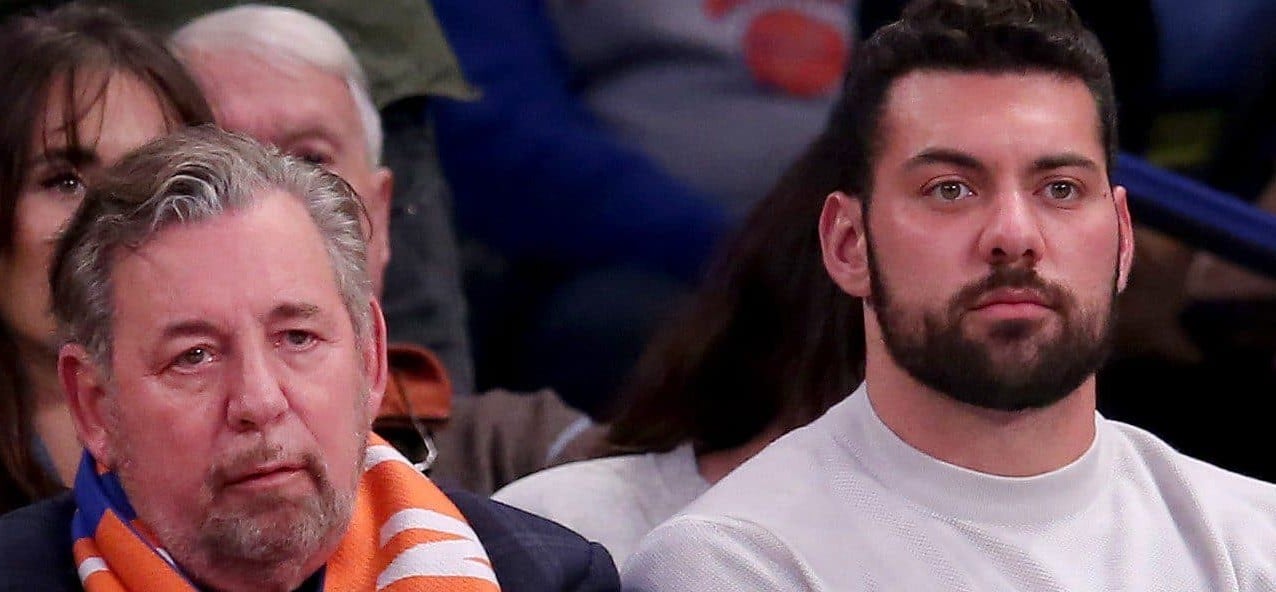

The Rangers announced today that owner Jim Dolan will step back further from the oversight of the New York Rangers to make room for his son Quentin to take a larger role overseeing the Blueshirts. For some months now, Dolan the younger has been projected to take on a bigger role with the franchise, and today’s announcement just formalizes it. For the past 27 years Jim Dolan has been varyingly active in the running of the Rangers, stepping in at times to change the course of the club.
What this means for the Rangers is far from clear. At 32 years old, he is closer to two generations younger than his father, and possibly more polish. His opening PR quote suggests someone who understands that there’s more to managing than simply reacting and ordering people about.
“I’ve always had a tremendous respect and admiration for the New York Rangers organization, it’s been a part of my life for as long as I can remember,” Quentin Dolan said. “I’m honored to have this opportunity to ensure our hockey operations staff, coaches, and players have all the support they need to provide our fans a product they can be proud of. I’m looking forward to immediately getting to work with Chris Drury, Mike Sullivan, and the entire staff.”
Whether this results in a change of style remains to be seen, but just like we saw on the Chicago Blackhawks when Rocky Wirtz took over from his father Bill – nicknamed “Dollar Bill” for his miserly way, things can change quickly given the chance. What’s different though is that Rocky assumed control of the team after his father passed away. Jim Dolan is still around, and still actively involved in running the overall business, perhaps making Quentin less likely to make any broad changes in the short term.
The 32 year old is 17 years the younger of Chris Drury, and is stepping into the first prominent role of his career. Aside from his father’s backing and what appears to be a developing relationship with the Rangers management team, he appears to lack the experience to make major decisions without consulting his father or outsiders.
Quentin Dolan – Just A Rich Kid?
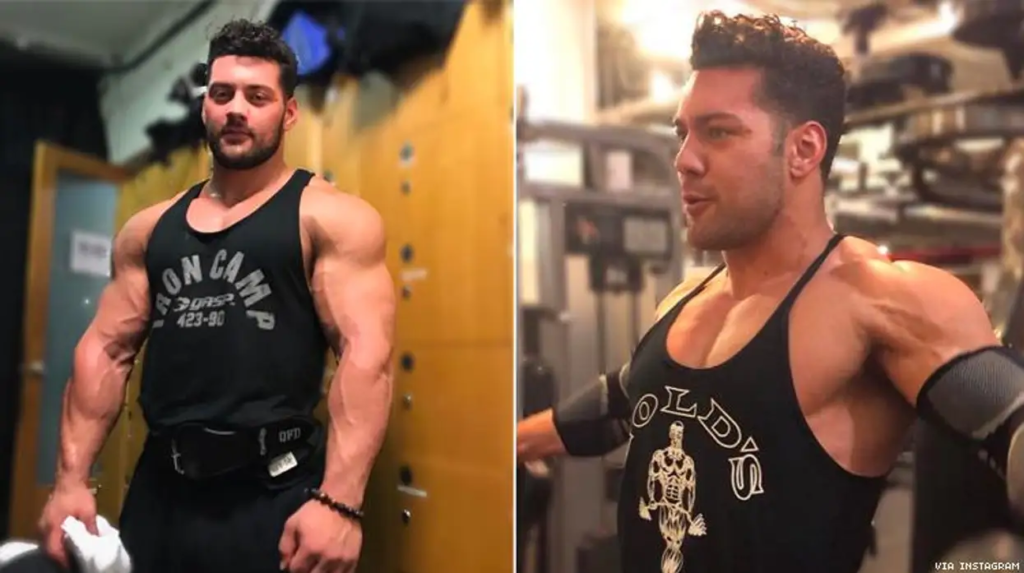
Dolan’s progression to the leadership role has many of the hallmarks of being born into wealth. He is getting the opportunity because of who his father is, not necessarily because of his competency. To date his highest public profile has been around things like his preference for working out, hilariously referenced in this article. He has over 50K followers on instagram, though his account is private, and is portrayed sometimes as a fitness influencer.
Quentin is a big proponent of fitness and wellness, rather than business, previously holding the role “Senior Vice President of Player Performance” – which may be significant, or may simply be a glorified title for a personal trainer. How much oversight he has over the players is relatively unknown.
How relevant this experience is to overseeing the Rangers and whether it ultimately is good for the team and their fans remains to be seen, though certainly Jim Dolan’s tenure has been checkered, and is yet to result in a championship for a team that is short on success over a long period.
Dolan’s Biggest Move Came Early
Perhaps Dolan’s biggest move for the franchise came in 2000, a year after he took over from his father Charles Dolan. He fired cup-winning GM Neil Smith and replaced him with Glen Sather, the storied coach and GM from the hey-day of the Edmonton Oilers. The hiring came following three straight seasons without the playoffs, and six since they won the Stanley Cup.
Sather came with plenty of braggadocio, claiming before his hiring that “if [he] had the Rangers payroll, he’d never lose a game, something that proved to be far from the truth in his first four seasons as the Rangers boss, which also coincided with the lead-up to the lockout season in 2004-05 and the institution of the Salary Cap the following season when the league returned.
The boss quickly became unpopular with his first coaching hire, that of Ron Low. Low had served as head coach under Sather in Edmonton, and quickly became seen as an ineffective leader behind the bench, failing to inspire the group of misfits and depleted prospect pool left by the previous leadership. Sather attempted to take short cuts in the early years, including a big trade for hated Flyer Eric Lindros, who had recently been cleared after yet another concussion. Lindros was fine in his Rangers tenure, but was unable to lead the Rangers back to the playoff.
Sather attempted to coach after firing the equally unpopular Bryan Trottier in 2002, Sather stepped behind the bench implying that coaching was easy and that he’d get the team back to the playoffs. His tenure extended through 3 more failed runs at the playoffs, ultimately only ending after the lockout season and his stepping back from day to day activities.
The Owner Whisperer
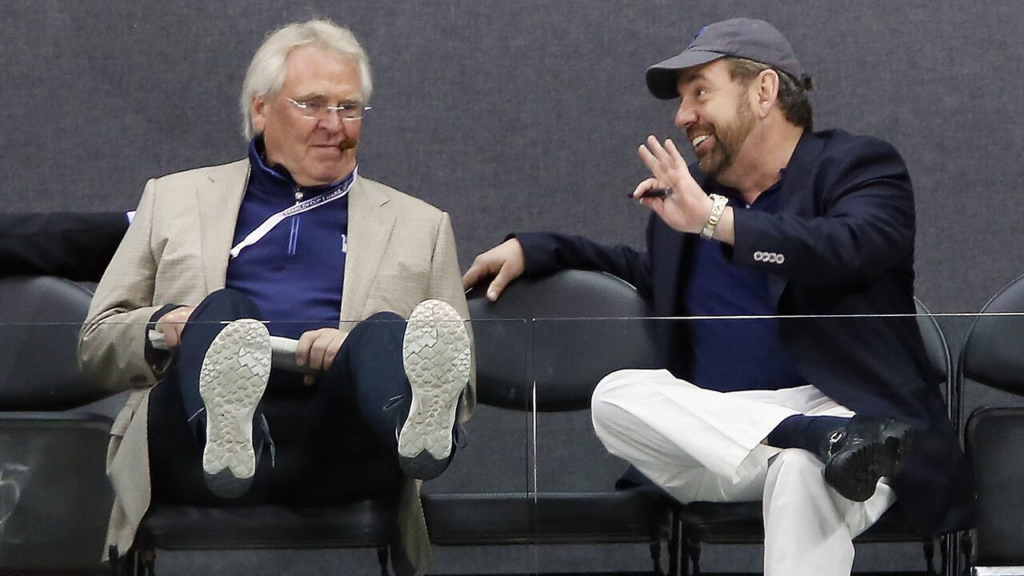
As the Rangers finally returned back to the playoffs, an 11 of 12 seasons in which they made the playoffs including a run to the Stanley Cup Finals in 2014, Sather continued to step back from the day-to-day activities, ultimately becoming a special advisor to Jim Dolan. Dolan reportedly trusted Sather implicitly and appointed him to further roles beyond the Rangers as a way to keep him involved.
Sather is said to have been Dolan’s trusted voice, whether solicited or otherwise, as he acted as a sort of intermediary between ownership and the team, coinciding with perhaps one of the most successful eras in Rangers’ history. But as Sather’s priorities shifted, he stepped further back, though he was thought to have been again consulted leading up to the appointment of Drury.
The Incident That Changed Everything
His most prominent recent interjection came with the appointment of Chris Drury as GM (and later President) two days after the Rangers were humiliated by Tom Wilson and the Washington Capitals in which Artemi Panarin was thrown around by the power forward.
The incident sparked a public rebuke by the team against George Parros and the Department of Player Safety, and the firing of then President John Davidson and GM Jeff Gorton, whom reportedly was not in support of the message that was later unofficially attributed to Mr. Dolan.
What followed was a $250,000 fine for the organization, the highest levied by the league to any franchise at the time. Dolan appeared not to care, satisfied that his voice was heard, though the organization moved on without further comment.
Post Sather And The Return Of The Owner
Following the painful transition, Sather stepped away and Dolan began to appear more often in the conversation. Chris Drury appeared to be either tightly aligned with the owner, or maybe even a sycophant to his worst tendencies. Where Sather was a trusted voice that could guide the owner, Drury appeared more one that reenforced what Dolan wanted, turning the Rangers organization into one that began to retreat further and to trust even less.
Even prior to his promotion to GM and President, Drury had been known for some questionable antics that lead to the disaffection of prospects like Lias Andersson and Vitali Kravtsov. Whether the two were overhyped miss-selections by Gorton and his scouts is certainly worthy of consideration, but Drury’s aggressive handling of both players as GM of the Hartford Wolf Pack certainly didn’t help matters.
With Dolan lacking the barrier between team management and ownership, both the Rangers and the Knicks – whom Dolan also owns – began reducing access to the respective teams, and creating a separation between the administrative functions and the players, well documented in this article by Vince Mercogliano. Incidents like the married Artemi Panarin’s unwanted advances towards a staff member only further accelerated the paranoia, which has further manifested itself in reduced availability of the front office to reporters.
Increasing Political Presence
Over the past Spring, Jim Dolan has flexed another muscle, first sharing his affinity with President Donald Trump by inviting him personally to attend Game 3 of the NBA Finals, or by throwing shade at progressive NY mayor Zohran Mamdani in the victory parade celebrations following their win.
While the fan base for the Rangers is broad and covers the entire spectrum, the public comments, along with the reception that Trump got at the Knicks game probably have done little to help his image.
Any change at this point is welcome for the Rangers fan base, who continue to wait for a repeat of the 1994 celebrations. Whether Quentin can deliver where his father couldn’t is likely to take some years to prove out given where the team is at, but where there’s change there’s hope.


 CAR
CAR PIT
PIT WSH
WSH CBJ
CBJ NYI
NYI