The story of the 1926–27 New York Rangers season is one of the most impressive debuts in professional sports history. But they were New York’s second NHL team, following the New York Americans by one season.
Having recently rebuild Madison Square Garden, Developer and Promoter George “Tex” Rickard was looking for tenants and convinced notorious bootlegger Bill Dwyer to bring professional hockey to New York. Dwyer bought the idle Hamilton Tigers franchise and rights to their players for $75,000 and established the Americans as a team for the 1925-26 season.
NHL hockey was a success in New York, and Rickard saw an opportunity to get into the action himself, directing Colonel John S. Hammond to begin the process of building a franchise. Hammond turned to respected hockey manager and coach Conn Smythe to assemble a competitive roster for the club’s inaugural season.

Smythe looked to the WCHL in the Pacific Northwest which had folded in 1925. There he scouted and signed legendary talents like Bill Cook and brother Fred Cook – better known as “Bun”. He also added center Frank Boucher, and fierce defenseman Ivan Johnson – “Ching” Johnson. The quartet would lay the foundation for the early success of the Rangers.
Unfortunately Smythe and Hammond had a contentious relationship. Hammond wanted to sign Babe Dye to a $14,000 contract, having been recommended the player by a friend. Smythe was not interested though, and said that the Rangers didn’t need that kind of player. Dye went on to score 200 goals in the NHL, Smythe for his part had worn out his welcome was let go by Hammond before training camp had even begun.
To replace him, Hammond hired Lester Patrick, bringing him into the picture just three months before the season started. The architect who built the early successful Rangers would go on to make the Toronto Maple Leafs an equally competitive team, and his name now adorns the trophy given to the player who is adjudged the best performer in the playoffs every season.
Patrick for his part, would turn the new team into an elite line-up that would win three cups in its first fourteen years of competing.
THE NEW YORK RANGERS GET THEIR NICKNAME
Sportswriters quickly dubbed the upstart club “Tex’s Rangers,” a moniker that stuck and inspired the iconic diagonal lettering slashed across their blue jerseys. Though Smythe departed over management disagreements just before the puck dropped, veteran hockey pioneer Lester Patrick stepped in to guide the team behind the bench and from the front office.
Rickard liked the name, though it was Patrick who convinced him to include the city name as the other existing NHL teams already did.
OPENING NIGHT SPECTACLE
The Rangers opened their inaugural campaign on November 16, 1926, treated by New York society as a grand occasion, complete with formal wear, furs, and two marching bands playing on the Garden ice. More than 15,000 people attended opening night. The team backed up the pageantry immediately, stunning the defending Stanley Cup champion Montreal Maroons 1–0 behind a gritty game-winner from captain Bill Cook and a stellar shutout in net from Hal Winkler, though Lorne Chabot would see the vast majority of action in this first season.
Back then games started at 8:45 to coincide with the final curtain for several of the local theaters, and the referee used a dinner bell rather than a whistle to signify a penalty. Between periods entertainment was provided by actress Lois Moran – who also dropped the first puck – along with Katy Schmidt, a figure skating star.
BOUCHER STOUCHE
Though Frank Boucher would go on to win the Lady Byng trophy seven times, he was not in such a gentlemanly mood on opening night. The opponent was Montreal Maroons forward Bill Phillips, with the altercation happening in the third period when Boucher became angry over Phillips’ rough play. The two dropped their gloves and fought long enough for referee Lou Marsh to issue each a five‑minute major penalty. This was the only fight Boucher ever took part in during his playing days, despite his reputation for gentlemanly conduct on the ice, and the award was eventually just given to him to keep.
IMMEDIATE SUCCESS
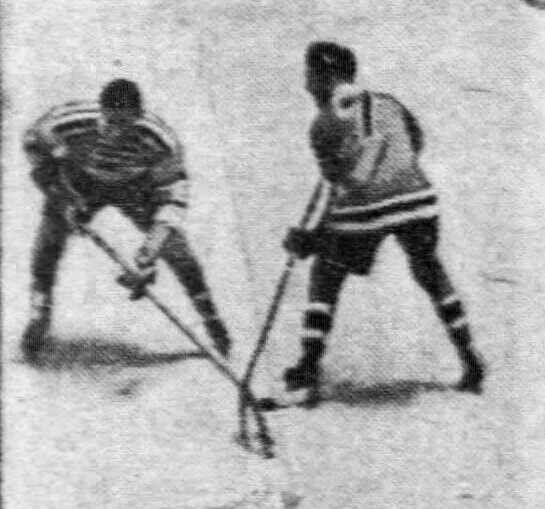
Far from suffering the usual growing pains of a brand-new expansion franchise, “Tex’s Rangers” captured the imagination of the city. Led by Bill Cook’s league-leading goal-scoring exploits and anchored by a tight, disciplined defensive structure, the rookies carved through the schedule. They capped off their maiden voyage by capturing first place in the tough American Division, a feat so rare that no other expansion team would replicate winning their division in a true debut season for decades.
Throughout the 44 game season, the Rangers had only one three game losing streak, and a single two game losing streak. On the winning side they put together four-game and three-game winning streaks, both on two occasions.
Though their dream run ultimately hit a wall in the postseason semifinals where they were edged out by the Boston Bruins, the Rangers’ first season transformed hockey into a cultural obsession in New York and set the stage for them to capture their first Stanley Cup championship just one year later.