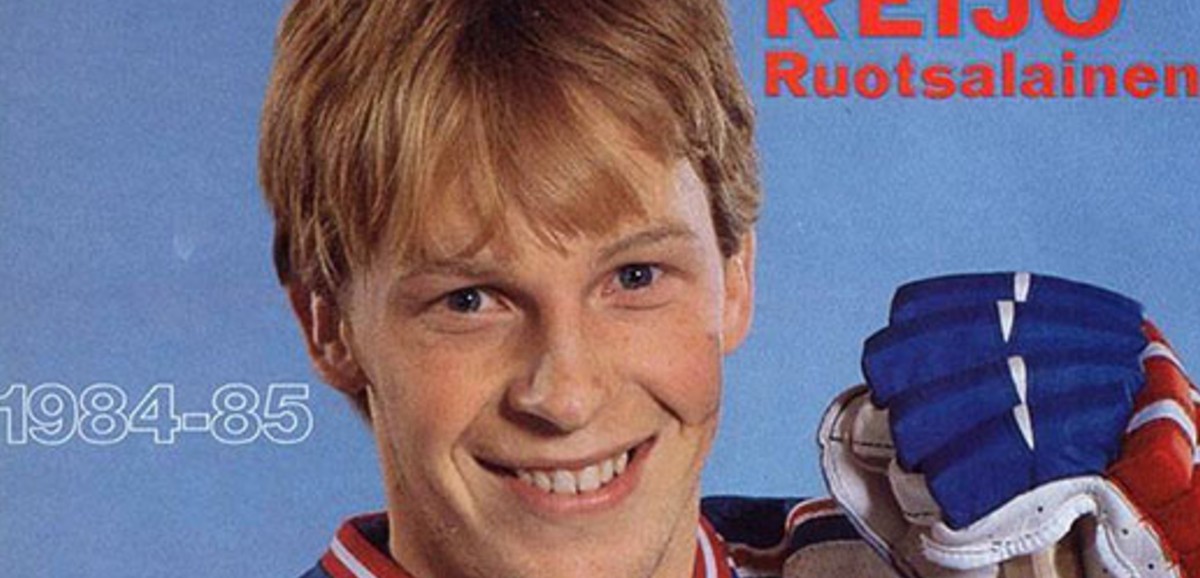
If you love your hockey served with a side of high-octane chaos, defensive breakdowns, and a mid-season identity crisis, look no further than the 1984–85 New York Rangers. Long beforetoday’s structured systems and enforced parity, this edition of the Blueshirts took the Madison Square Garden faithful on a dizzying 80-game roller coaster.
For many, it was one of the most uniquely entertaining—and baffling—seasons ever played on Broadway.
HIGH HOPES AND HEAVY EXPECTATIONS
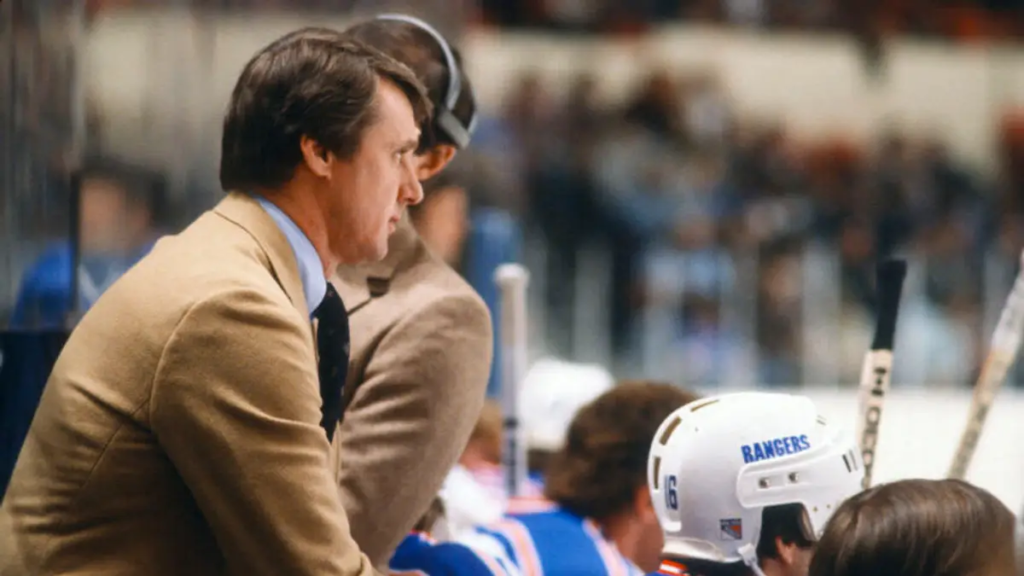
Entering the fall of 1984, optimism was rising throughout Manhattan. Herb Brooks was in his fourth season behind the Rangers bench, and had led the team to the second round of the playoffs in each of those seasons. Could the team finally make the jump and finally break forty-four years of futility.
The locker room boasted a strong core led by captain Barry Beck, alongside talented forwards and creative playmakers. On paper, the Rangers looked built to challenge the heavyweights of the Patrick Division. But hockey isn’t played on paper—and reality hit Broadway hard.

THE HOSPITAL WARD AND DEFENSIVE SHORTCOMINGS
Right from the opening weeks, it was clear this team was going to live on the edge. Brooks’ system demanded aggressive skating and puck control, but when things broke down, they broke down spectacularly.
A 7-4-1 start to the season was promising, but they’d lost Mark Pavelich to a broken ankle in Game 2, and then lost Ron Greschner – who’d miss 31 games with a should separation, and Don Maloney a couple of weeks later to a broken leg. Throw in niggling injuries that cost Pierre Larouche 15 games, and the end of Anders Hedberg’s NHL career when he missed 19 games and retired to the front office.
Despite the injuries, the Rangers could still score with the best of them, finishing the year with 295 goals for (ranking 8th out of 21 teams). They put on some absolute offensive clinics for the home crowd, including a wild 11–2 blowout win against the New Jersey Devils and an unforgettable 8–7 shootout thriller against the powerhouse Edmonton Oilers, a team they had beaten just once in the previous ten games.
The problem? Keeping the puck out of their own net.
The Blueshirts surrendered a staggering 345 goals against (16th overall), leaving goaltenders Glen Hanlon and John Vanbiesbrouck under constant, relentless siege. Night after night, games at Madison Square Garden turned into track meets. Leads vanished in the blink of an eye, multi-goal deficits piled up, and the team struggled to find any semblance of a defensive conscience.
A 5-15-4 slide from November 11th through the end of December put the team on the back foot at 12-19-5 and three points behind the fourth placed Pittsburgh Penguins for the final playoff spot in the Patrick Dvision.
BROOKS OUT, PATRICK IN
As the losses mounted and the frustration inside the locker room reached a boiling point, front-office changes became inevitable. General manager Craig Patrick made the bold decision to step down from the upstairs office and take over behind the bench, relieving Brooks (who finished his stint with a 15–22–8 record).
Patrick tried to steady the ship and inject a fresh voice into the room, going 11–22–2 down the stretch. While the coaching change sparked brief periods of inspired hockey, the fundamental structural flaws remained. The team simply leaked too many high-danger scoring chances. When the dust settled on the 80-game schedule, the Rangers limped across the finish line with a sub-.400 record of 26–44–10, totaling just 62 points.
HOW DID THEY MAKE THE PLAYOFFS?!?!
Here is where the magic (or the quirkiness) of 1980s NHL formatting comes into play. Despite finishing 18 games under .500 and carrying a sub-par points percentage (.388), the weakness in the Patrick Division threw the Rangers a lifeline.
Because the division format guaranteed postseason berths to the top four teams regardless of overall point totals across the conference, the Rangers managed to squeak into the playoffs as the 4th seed. They backed into the postseason, proving that sometimes you don’t always need a great record—you just need your division to be weak enough in the middle, to give get an opportunity for a second chance.
INDIVIDUAL BRIGHT SPOTS
While the team record was an uphill battle, several individual performances provided plenty of highlights for fans tracking the box scores:
- The Flying Finn on the Backend: Defenseman Reijo Ruotsalainen put together a phenomenal campaign, leading the entire team in scoring with 73 points (28 goals and 45 assists) entirely from the blue line. His skating and offensive instincts were light-years ahead of most defensemen of that era.
- The Rookie Sensation: Young forward Tomas Sandstrom burst onto the scene in style, leading the squad with 29 goals while showing a scoring touch that hinted at a long, successful career ahead.
A SHORT POSTSEASON
The party in the postseason was, predictably, short-lived. Drawing the Philadelphia Flyers in the Patrick Division Semi-Finals meant facing up to the President’s Trophy winners. The Flyers had run roughshod over the regular season with 53 wins and possessed a suffocating, physical style that exploited every single weakness the Rangers had exposed all year.
Philadelphia made quick work of the Blueshirts, sweeping the series 3–0 and sending New York packing into an early summer. To their credit, the Rangers did take the Flyers to OT in the first game, losing 5-4, stayed competitive in game 2, and then fought back with two early goals in the third to give the Flyers a minor scare in the series clinching game, before losing 6-5.
FINAL VERDICT
The 1984–85 New York Rangers season wasn’t for the faint of heart. It was messy, unpredictable, and chaotic, yet it featured offensive explosions, a mid-season coaching change, and several players who were in the earlier stages of their careers. If nothing else, the Rangers often entertained, even if the results weren’t always there.